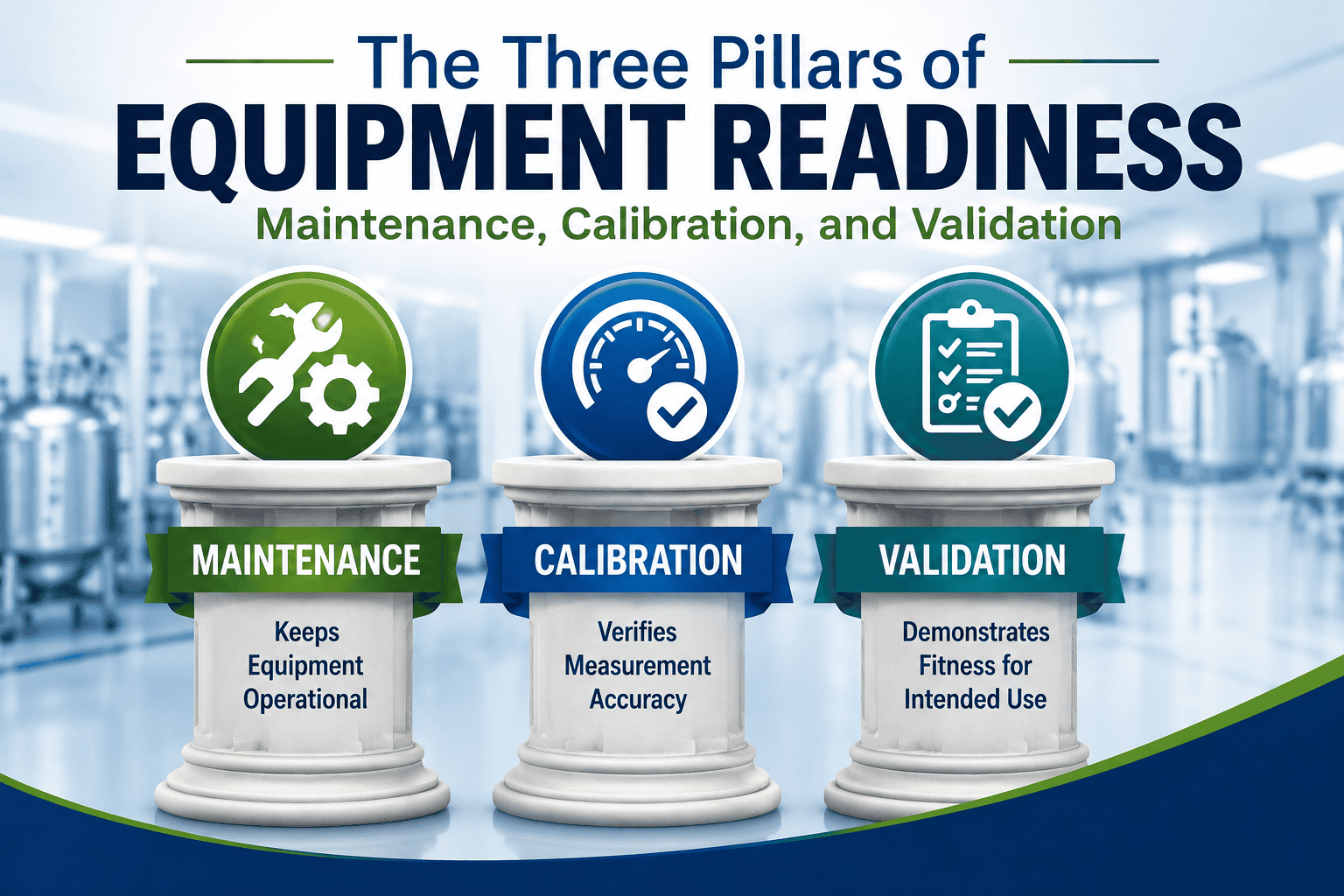
Before developing GxPReady Suite, we had firsthand experience trying to find software to track calibration, validation, and maintenance. There are plenty of CMMS products available, so you might wonder why we would develop another one. But when you start comparing them for use in an FDA-regulated environment, the choices narrow quickly. Finding a system that meets your requirements without adding unnecessary complexity can be surprisingly difficult.
Here are five questions that can help you narrow the field before spending too much time on demonstrations and proposals.
Is the system suitable for validated use?
This question can eliminate many of the options you find on general software comparison sites. Unfortunately, most of those sites don’t let you filter for systems designed to support GMP requirements or validation.
Ask whether the software supports the records, access controls, audit trails, and other controls you need. Also ask what specifications, testing, and qualification documentation the vendor provides. A system does not have to be developed exclusively for GMP use, but your company must be able to demonstrate that it is suitable and validated for its intended use.
How long will it take to get validated, and what will we have to do?
Many systems come with a “validation package” that helps you qualify the software after configuration. However, extensive configuration, custom workflows, and integrations can turn implementation and qualification into a project lasting months.
Find out exactly what the vendor supplies, what your company must complete, and how soon the system can realistically be ready for regulated use. GxPReady Suite uses our Flash Validation approach to simplify setup and qualification; the actual timeline depends on your requirements and readiness.
How much does it cost, and are the costs predictable?
You have probably looked at the license price already. But costs can increase once the system is configured for your particular use, and some advertised features may require additional fees. Consider the total cost, including:
- Setup and configuration
- Qualification and validation work
- Change control and ongoing review
- Per-user, equipment, or site licenses
- Data import or migration
- Maintenance, backups, and support
- Software revisions and associated assessments
- Training and maintaining features you may not actually need
Which features do we really need in the validated system?
This one is a little tricky. Some features look impressive but may not be necessary for your regulated work. Every additional workflow, user group, configuration, or interface can add training, administration, and ongoing change-control responsibilities.
Do you need to enter every calibration reading directly into the CMMS, or can you maintain the approved supporting record as an attachment? Do you need complex automated scheduling, or will a simpler, controlled process work? Can users retrieve complete, human-readable records without moving through several screens?
The goal is not to buy the most features. It is to select a system your company can use effectively and keep in a validated state. For a more detailed discussion of essential controls, workflows, and reports, see our article on regulated CMMS requirements and reporting capabilities.
Will the documentation and support be there if we get audited?
If you are using a CMMS for regulated activities, you need evidence that it meets your written requirements—not just a claim that it works for other companies.
Can you trace those requirements to documented qualification or verification? Can you retrieve equipment histories, supporting records, and audit trails promptly? Will you have the documentation you need without waiting for the software vendor to assemble it? These are important questions to resolve before making a selection.
GxPReady Suite was developed by people with extensive experience in FDA-regulated industries to provide a practical, cost-effective system for maintenance, calibration, and validation tracking. Our emphasis is on essential GMP controls, straightforward workflows, and qualification support that helps customers get into controlled operation without taking on unnecessary complexity.